For research purposes only — not for human consumption — 18+ only
Healing & Recovery
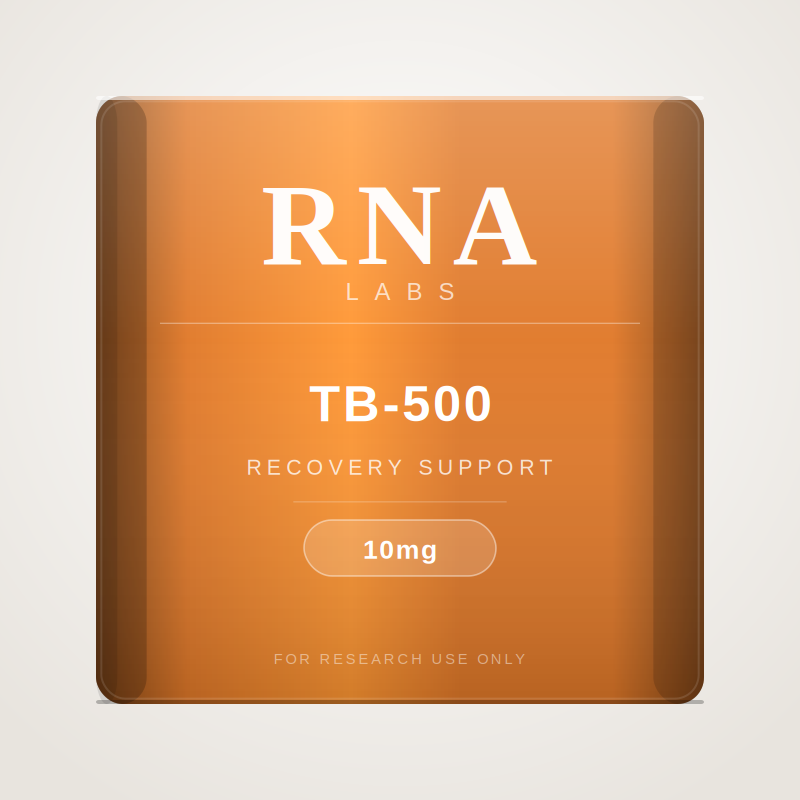
TB-500 10mg
$80.00
Thymosin Beta-4 fragment. Research into tissue repair muscle regeneration and inflammation modulation.
Use the peptide calculator to determine exact reconstitution volumes and dosing schedules for your research protocol.
Open Peptide Calculator ↗TB-500 is a synthetic analogue of Thymosin Beta-4 (Tβ4), a naturally occurring 43-amino-acid peptide found in virtually all human and animal cells. It is one of the most comprehensively studied peptides in tissue repair research, with a broad literature base covering wound healing, muscle regeneration, tendon repair, and cardiac recovery. TB-500 plays a critical role in the body's response to injury by promoting cell migration, new blood vessel growth, and reduction of inflammatory responses. Its primary mechanism involves regulation of actin — a protein critical to cell structure and movement — making it a key modulator of the body's natural healing cascade.
Molecular Data
Sequence: Ac-LKKTETQ (active fragment) | Molecular Formula: C212H350N56O78S | Molecular Weight: 4963.5 g/mol
Tissue Repair and Regeneration
TB-500 binds to actin monomers, regulating the actin:thymosin beta-4 ratio within cells. This promotes endothelial cell migration and angiogenesis, reduces inflammation via downregulation of inflammatory cytokines, and stimulates stem cell differentiation. Research models demonstrate upregulation of matrix metalloproteinases critical for tissue remodelling. Animal models demonstrate accelerated healing of tendons, ligaments, skin wounds, and cardiac muscle post-infarction.
Anti-Inflammatory Effects
TB-500 has demonstrated significant anti-inflammatory properties in multiple animal models. By modulating inflammatory cytokines and promoting the migration of cells responsible for tissue repair, TB-500 helps reduce the chronic inflammation that often impedes the healing of musculoskeletal injuries. This makes it of particular interest in models of chronic tendinopathy and inflammatory joint conditions.
Cardiac and Neurological Research
Beyond musculoskeletal applications, TB-500 has shown promising results in cardiac repair models. Studies in mice with induced myocardial infarction have demonstrated that Thymosin Beta-4 can promote the migration of epicardial progenitor cells to the damaged myocardium, stimulating cardiac repair. Additionally, early research suggests neuroprotective properties, with TB-500 promoting recovery after central nervous system injury in animal models.
Hair Follicle Activation
Research has demonstrated that Thymosin Beta-4 plays a role in hair follicle development and activation. Studies show that TB-500 promotes the differentiation of hair follicle stem cells and may support hair growth by activating follicles from a resting state. This has generated research interest in the context of alopecia and hair loss conditions.
Future Research
TB-500 remains an active area of preclinical investigation, with research extending into cardiac repair, neurological recovery, and hair follicle biology. Its broad mechanism of action through actin regulation positions it as a versatile research tool with potential applications across multiple tissue types.
Reviews
There are no reviews yet.