For research purposes only — not for human consumption — 18+ only
GH Peptides
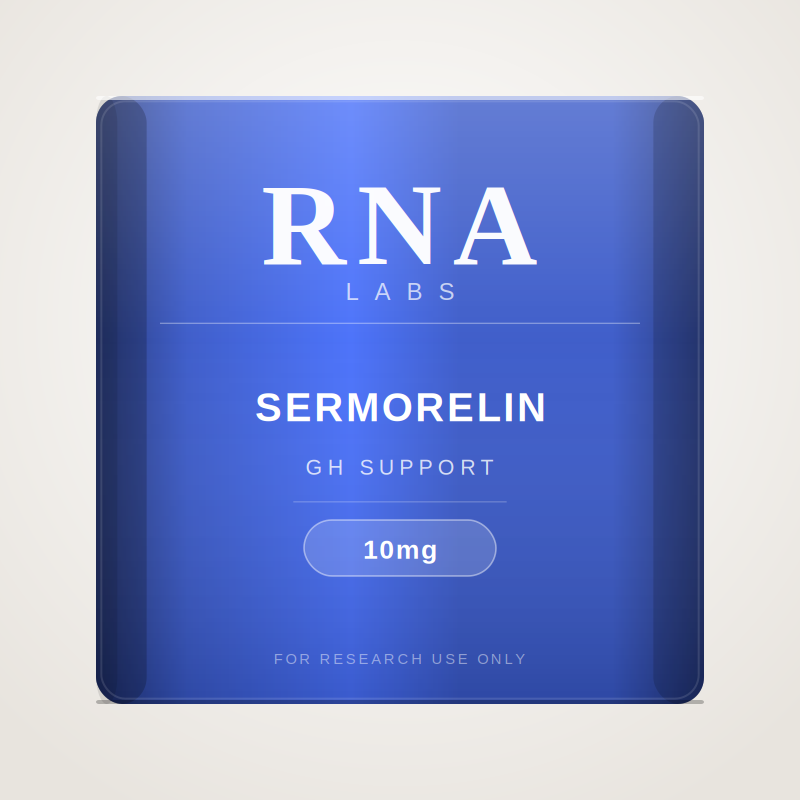
Sermorelin 10mg
$75.00
Growth hormone releasing hormone analogue GHRH 1-29. Stimulates endogenous GH production.
Use the peptide calculator to determine exact reconstitution volumes and dosing schedules for your research protocol.
Open Peptide Calculator ↗Sermorelin (GRF 1-29 NH2) is a synthetic analogue of the first 29 amino acids of endogenous Growth Hormone Releasing Hormone (GHRH), representing the minimal biologically active fragment responsible for pituitary GH stimulation. Unlike exogenous synthetic GH, sermorelin works through the natural hypothalamic-pituitary axis, preserving normal pulsatile GH release patterns, physiological somatostatin feedback, and pituitary responsiveness. It was FDA-approved for the treatment of childhood GH deficiency and has been extensively studied in adult GH deficiency and age-related GH decline (somatopause).
Molecular Data
Sequence: Tyr-Ala-Asp-Ala-Ile-Phe-Thr-Asn-Ser-Tyr-Arg-Lys-Val-Leu-Gly-Gln-Leu-Ser-Ala-Arg-Lys-Leu-Leu-Gln-Asp-Ile-Met-Ser-Arg-NH2 | Molecular Formula: C149H246N44O42S | Molecular Weight: 3357.93 g/mol
Physiological GH Stimulation
Sermorelin binds GHRH receptors (GHRHR) on pituitary somatotroph cells with high affinity, stimulating both GH gene transcription and GH secretion in a dose-dependent manner. Because sermorelin operates through the natural axis, GH release remains subject to normal somatostatin negative feedback — preventing supraphysiological GH levels and preserving the physiological GH pulse pattern that is absent with exogenous GH administration.
Somatopause Research
Age-related GH decline (somatopause) begins in the third decade and results in progressive reductions in lean mass, bone density, sleep quality, and metabolic efficiency. Sermorelin has been extensively studied as a research tool for reversing somatopause-related changes through stimulation of endogenous GH production. Because it restores physiological GH pulsatility rather than imposing supraphysiological levels, it represents a distinct research approach compared to exogenous GH.
Pituitary Axis Preservation
Unlike exogenous GH, which suppresses the hypothalamic-pituitary axis through negative feedback, sermorelin preserves and may enhance pituitary GH secretory capacity. Research suggests that regular stimulation with GHRH analogues maintains somatotroph cell responsiveness and may prevent the progressive decline in pituitary GH output associated with ageing.
Comparative Research
Sermorelin serves as a reference compound for comparison with newer GHRH analogues (tesamorelin, CJC-1295). Its relatively short half-life (~7-10 minutes) provides a useful baseline for evaluating the additional pharmacokinetic benefits of longer-acting modifications incorporated into subsequent generations of GHRH analogues.
Future Research
Sermorelin research continues in the context of GH deficiency, somatopause, and comparative pharmacology of GHRH analogues. Its well-established safety profile and physiological mechanism make it a foundational reference compound in GH axis research.
Reviews
There are no reviews yet.