For research purposes only — not for human consumption — 18+ only
Cognitive
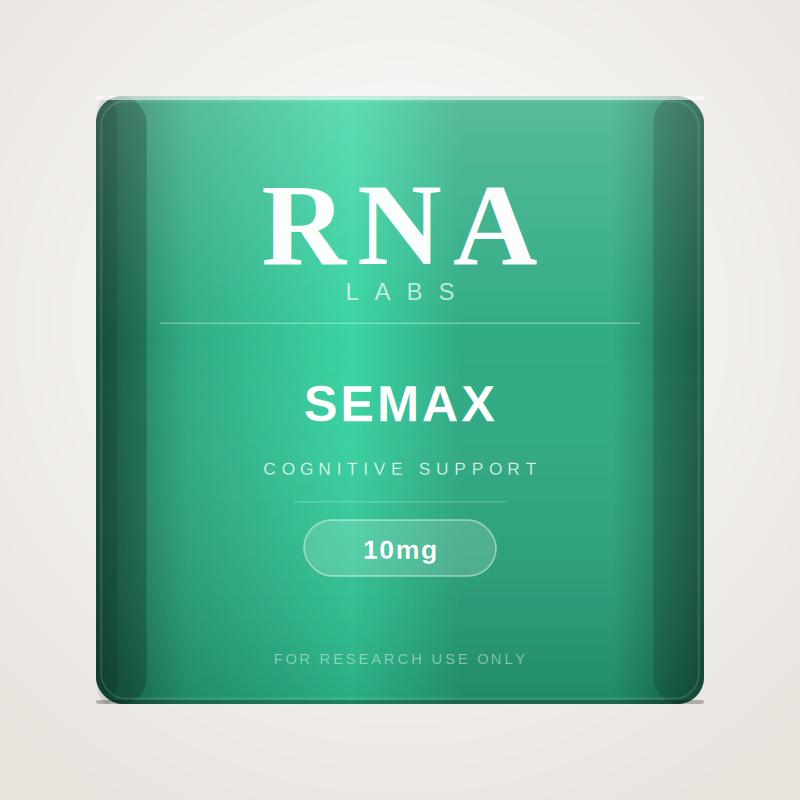
Semax 10mg
$60.00
Synthetic ACTH analogue with nootropic properties. Research into BDNF upregulation and nerve growth factor activity.
Use the peptide calculator to determine exact reconstitution volumes and dosing schedules for your research protocol.
Open Peptide Calculator ↗Semax is a synthetic heptapeptide (Met-Glu-His-Phe-Pro-Gly-Pro) derived from the ACTH(4-7) fragment, developed in Russia and registered there as a nootropic and neuroprotective medication. Unlike full ACTH, Semax has no adrenal or hormonal activity — its effects are mediated entirely through neurological pathways. It is one of the few peptide nootropics with a substantial published clinical literature, with research spanning cognitive enhancement, stroke recovery, optic nerve atrophy, and ADHD models over more than 30 years.
Molecular Data
Sequence: Met-Glu-His-Phe-Pro-Gly-Pro | Molecular Formula: C37H51N9O10S | Molecular Weight: 813.92 g/mol | CAS Number: 80714-61-0
BDNF and NGF Upregulation
Semax's most studied mechanism is the rapid and sustained upregulation of BDNF (Brain-Derived Neurotrophic Factor) and its high-affinity receptor TrkB. BDNF is the most important neurotrophin for adult neuroplasticity, supporting synaptic strengthening, neurogenesis in the hippocampus, and neuronal survival under stress. Semax also increases NGF (Nerve Growth Factor) expression, further promoting neuronal health and axonal growth. These effects on neurotrophins are particularly relevant to models of depression, cognitive decline, and neurodegeneration.
Neuroprotection in Ischaemia Models
Semax has demonstrated significant neuroprotective effects in animal models of cerebral ischaemia (stroke), reducing infarct volume, preserving neurological function, and improving recovery timelines. These effects are attributed to BDNF upregulation, reduction of inflammatory cytokines in ischaemic tissue, and modulation of glutamate excitotoxicity. Russian clinical protocols include Semax as an adjunct treatment in ischaemic stroke, supported by clinical trial data.
Dopaminergic and Serotonergic Modulation
Semax modulates dopaminergic and serotonergic neurotransmitter systems, producing cognitive-enhancing and mood-stabilising effects in animal models. Research demonstrates increased dopamine turnover in the prefrontal cortex and striatum, regions critical for working memory, executive function, and motivation. These neurochemical effects contribute to Semax's observed cognitive-enhancing properties in animal models of stress-induced cognitive impairment.
Enkephalin System Modulation
Semax inhibits enzymes responsible for degrading endogenous enkephalins (opioid peptides), thereby extending their activity and contributing to analgesic and stress-protective effects. This modulation of the endogenous opioid system is distinct from direct opioid receptor agonism and does not carry the associated risks of dependence or respiratory depression.
Future Research
Research interest in Semax continues to expand internationally, particularly in models of depression (BDNF hypothesis), ADHD, stroke recovery, neurodegeneration, and cognitive ageing. Its established safety profile in Russian clinical use provides a useful backdrop for research programme design.
Reviews
There are no reviews yet.