
For research purposes only — not for human consumption — 18+ only
Other
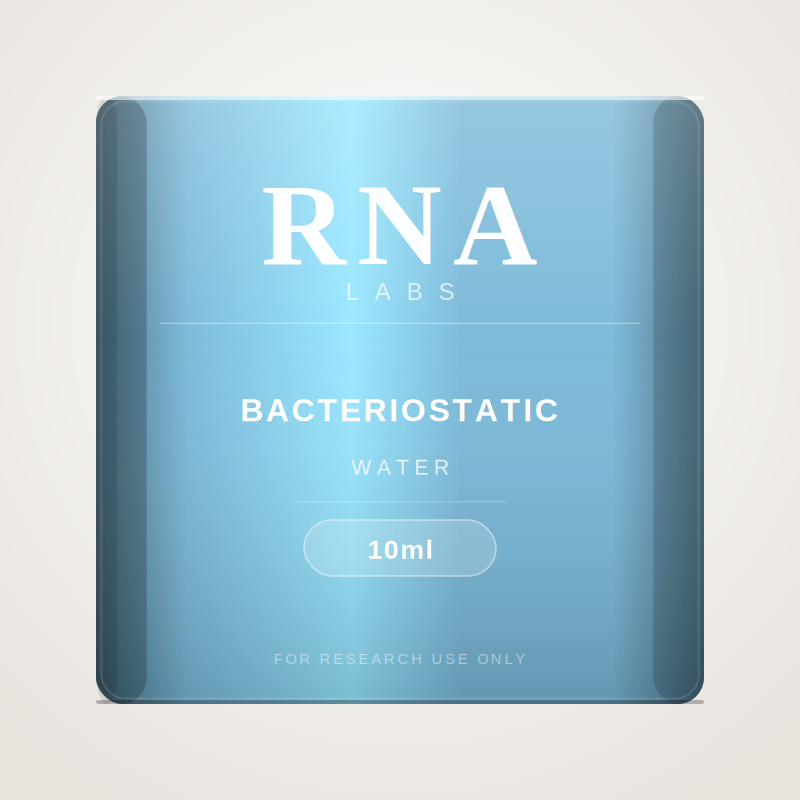
Bacteriostatic Water 10ml
$10.00
USP grade bacteriostatic water for peptide reconstitution. Essential for dissolving lyophilised peptides.
Use the peptide calculator to determine exact reconstitution volumes and dosing schedules for your research protocol.
Open Peptide Calculator ↗Bacteriostatic Water (0.9% benzyl alcohol in water for injection) is the standard and recommended reconstitution vehicle for lyophilised research peptides. The 0.9% benzyl alcohol concentration acts as a preservative, inhibiting bacterial growth through disruption of bacterial cell membrane integrity, and extends the usable life of reconstituted peptide solutions considerably compared to plain sterile water. It is designated 'bacteriostatic' rather than 'sterile' because it inhibits (bacteriostasis) rather than eliminates (sterilises) bacterial contamination, making it appropriate for multi-use vials used across multiple research sessions.
Molecular Data
Composition: Water for Injection + 0.9% Benzyl Alcohol (C7H8O) | pH: 4.5–7.0 | CAS (Benzyl Alcohol): 100-51-6
Reconstitution Principles
Lyophilised (freeze-dried) peptides must be reconstituted in an appropriate aqueous vehicle before use in research protocols. The reconstitution process dissolves the lyophilised cake to restore the peptide to its active solution form. Bacteriostatic water is preferred over plain sterile water for multi-use vials because the benzyl alcohol preservative maintains solution sterility across multiple needle punctures over weeks of storage at 4°C.
Compatibility Considerations
Bacteriostatic water is compatible with the majority of research peptides at its typical pH range of 4.5-7.0. However, some peptides may have specific pH requirements or may be more stable in slightly acidic or neutral conditions. For peptides prone to precipitation at low pH, sterile saline (0.9% NaCl) may be preferable. Always draw bacteriostatic water into the syringe and inject slowly along the vial wall to minimise foaming and preserve peptide integrity during reconstitution.
Storage and Handling
After reconstitution, peptide solutions in bacteriostatic water should be stored refrigerated at 2-8°C, protected from light, and used within 4-6 weeks. The benzyl alcohol preservative maintains antibacterial protection throughout this period provided sterile technique is used at each use. Repeated freeze-thaw cycles should be avoided as these can cause peptide aggregation and activity loss — if long-term storage of reconstituted solution is required, prepare aliquots before initial freezing.
Research Protocol Notes
Standard reconstitution uses 1-3mL of bacteriostatic water per lyophilised vial, depending on the desired working concentration. The 10mL vial provides sufficient volume for reconstituting multiple peptide vials or for preparing diluted working solutions from concentrated stocks. Always use sterile technique, including alcohol swabbing of the vial septum before each use, and discard if the solution becomes cloudy or particulate.
Future Research
Bacteriostatic water remains the standard reconstitution vehicle for research peptides. Research into alternative delivery vehicles including cyclodextrin complexes, liposomal formulations, and polymer nanoparticles continues for applications requiring enhanced stability or alternative delivery routes.
Reviews
There are no reviews yet.