For research purposes only — not for human consumption — 18+ only
Other
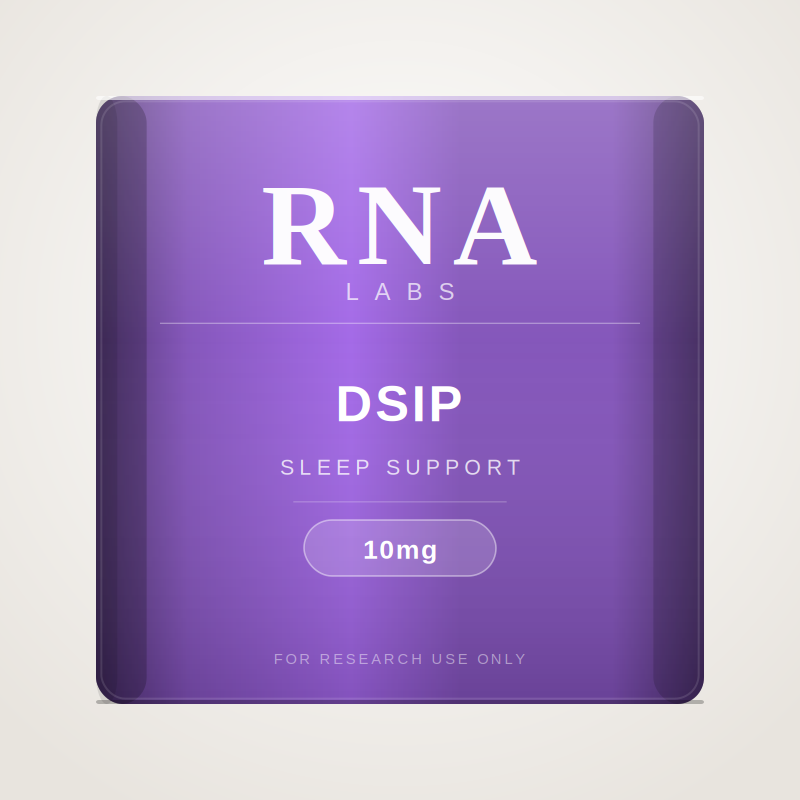
DSIP 10mg
$80.00
Delta Sleep-Inducing Peptide. Research into sleep architecture modulation and cortisol reduction.
Use the peptide calculator to determine exact reconstitution volumes and dosing schedules for your research protocol.
Open Peptide Calculator ↗DSIP (Delta Sleep-Inducing Peptide) is a naturally occurring neuropeptide first isolated from rabbit cerebral venous blood by Monnier and colleagues in 1977, named for its ability to induce delta (slow-wave) sleep electroencephalographic patterns when administered to rabbits. DSIP is a nonapeptide with an unusual cyclic structure formed by a disulfide-equivalent bond, and unlike most sleep-inducing compounds, its effects appear to be mediated through normalisation of sleep architecture rather than sedation. Beyond sleep, DSIP has demonstrated broad neuroendocrine modulatory properties affecting multiple hormonal axes.
Molecular Data
Sequence: Trp-Ala-Gly-Gly-Asp-Ala-Ser-Gly-Glu | Molecular Formula: C35H48N10O15 | Molecular Weight: 848.80 g/mol | CAS Number: 62568-57-4
Sleep Architecture Modulation
DSIP promotes slow-wave (delta) sleep without producing the sedation, muscle relaxation, or morning grogginess associated with conventional sleep medications. Research suggests DSIP acts by normalising disrupted sleep-wake cycles rather than forcing sleep onset — restoring the natural architecture of sleep including appropriate proportions of slow-wave and REM sleep phases. This normalising rather than sedating mechanism makes DSIP of research interest in models of insomnia, shift-work sleep disruption, and stress-induced sleep disturbance.
HPA Axis and Stress Response
DSIP modulates the hypothalamic-pituitary-adrenal (HPA) axis, normalising stress-induced hypercortisolaemia in animal models. Research demonstrates that DSIP reduces corticosterone levels in chronically stressed animals while preserving appropriate cortisol responses to acute stressors — a regulatory effect rather than a blunting one. This HPA modulation may underlie DSIP's demonstrated stress-protective and resilience-promoting properties.
Neuroendocrine Regulatory Effects
DSIP influences multiple hormonal axes: it modulates LH and GH release from the pituitary, has been shown to inhibit somatostatin secretion (potentially enhancing GH pulsatility), and may influence thyroid hormone regulation. These broad neuroendocrine effects suggest DSIP functions as a pleiotropic regulatory peptide rather than a specific sleep compound, consistent with its detection in multiple tissues beyond the brain.
Antioxidant and Neuroprotective Properties
Studies have demonstrated DSIP possesses antioxidant activity, reducing lipid peroxidation in aged animal brain tissue. Combined with its HPA-normalising effects, this antioxidant activity contributes to neuroprotective properties in aged animal models. Research has also documented analgesic properties and potential anti-tumour effects in rodent cancer models, expanding DSIP's research relevance beyond sleep biology.
Future Research
DSIP research continues in sleep medicine, chronic stress biology, HPA axis dysregulation, and neuroendocrine ageing. Its unique normalising (rather than sedating) mechanism of action distinguishes it from conventional sleep research compounds and warrants further investigation in conditions characterised by dysregulated sleep architecture.


Reviews
There are no reviews yet.