
For research purposes only — not for human consumption — 18+ only
Other
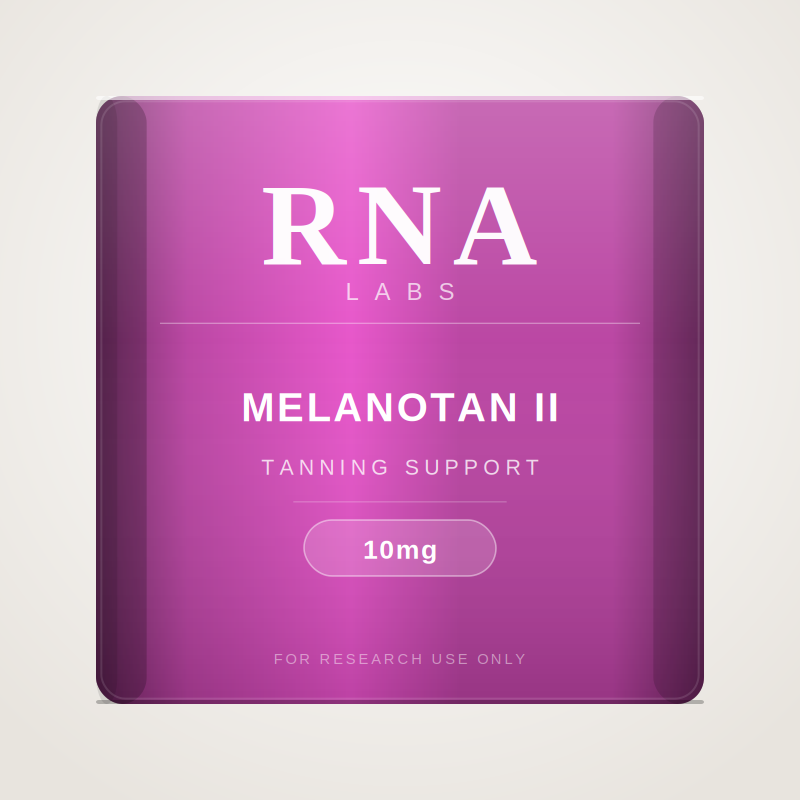
Melanotan II 10mg
$50.00
Cyclic lactam analogue of alpha-MSH. Research in melanogenesis and appetite modulation.
Use the peptide calculator to determine exact reconstitution volumes and dosing schedules for your research protocol.
Open Peptide Calculator ↗Melanotan II (MT-2) is a synthetic cyclic lactam analogue of alpha-melanocyte-stimulating hormone (α-MSH), originally developed at the University of Arizona as part of a research programme investigating skin cancer prevention through stimulation of natural melanogenesis. MT-2 is a non-selective melanocortin receptor agonist with activity at MC1R, MC3R, MC4R, and MC5R, giving it a broad pharmacological profile that spans skin pigmentation, appetite regulation, and central nervous system functions. It is a closely related structural variant of PT-141 (Bremelanotide).
Molecular Data
Sequence: Cyclo(Nle4, D-Phe7)-α-MSH(4-10) | Molecular Formula: C50H69N15O9 | Molecular Weight: 1024.18 g/mol | CAS Number: 121062-08-6
Melanogenesis via MC1R
Melanotan II's primary peripheral mechanism involves agonism at MC1R (melanocortin-1 receptor) on melanocytes. MC1R activation triggers the intracellular cAMP cascade, upregulating tyrosinase activity and shifting melanin production toward eumelanin (brown/black pigment) rather than phaeomelanin (red/yellow pigment). Eumelanin provides superior photoprotection compared to phaeomelanin, which was the rationale for MT-2's original development as a potential photoprotective agent.
Central Effects via MC3R and MC4R
MT-2's MC4R agonism in the hypothalamus produces effects on appetite suppression and energy expenditure, contributing to its observed effects on body weight in animal models. MC4R is a major regulator of energy homeostasis in the central nervous system, and MT-2's activity at this receptor has generated significant research interest in metabolic regulation. MC3R activation contributes to additional energy homeostasis effects and modulates inflammatory responses.
Receptor Pharmacology Research
As a non-selective melanocortin agonist, MT-2 has been widely used as a research tool to study the pharmacology of the melanocortin receptor family. Its activity across MC1R, MC3R, MC4R, and MC5R makes it valuable for comparative receptor studies and for investigating the downstream signalling consequences of multi-receptor melanocortin activation.
Future Research
Research continues into melanocortin receptor pharmacology, the development of more selective receptor subtype agonists, and the therapeutic potential of melanocortin signalling in energy homeostasis, inflammation, and neuroprotection.



Reviews
There are no reviews yet.