For research purposes only — not for human consumption — 18+ only
Healing & Recovery
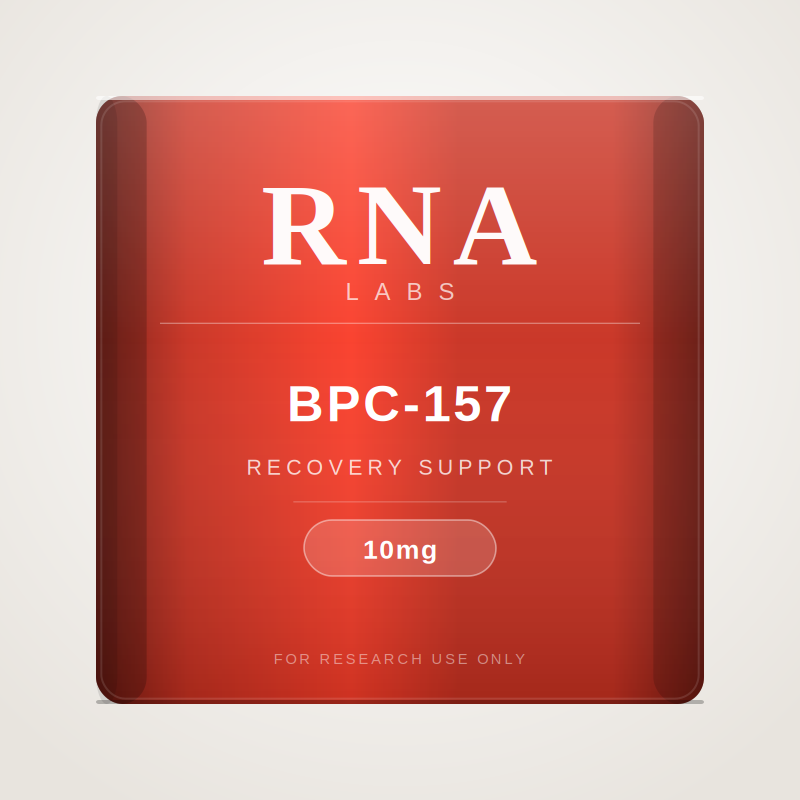
BPC-157 10mg
$60.00
Body Protection Compound-157. Studied for tendon ligament and gut healing. Promotes angiogenesis and collagen synthesis.
Use the peptide calculator to determine exact reconstitution volumes and dosing schedules for your research protocol.
Open Peptide Calculator ↗BPC-157 (Body Protection Compound-157) is a synthetic pentadecapeptide comprised of 15 amino acids, derived from a protective protein found naturally in human gastric juice. Through extensive animal studies, it has demonstrated the capacity to expedite the healing process for various types of injuries, including those affecting muscles, tendons, and ligaments. BPC-157 exhibits protective properties for organs and contributes to the prevention of gastric ulcers. This peptide exerts systemic effects within the digestive tract, addressing issues like leaky gut, irritable bowel syndrome (IBS), gastrointestinal cramps, and Crohn's disease. Additionally, BPC-157 possesses analgesic qualities and has been shown to enhance the healing of skin burns by promoting increased blood circulation in damaged tissues. Notably, it accelerates the formation of reticulin and collagen, fosters angiogenesis, and stimulates the infiltration of macrophages and fibroblasts.
Molecular Data
Sequence: Gly-Glu-Pro-Pro-Pro-Gly-Lys-Pro-Ala-Asp-Asp-Ala-Gly-Leu-Val | Molecular Formula: C62H98N15O22 | Molecular Weight: 1419.56 g/mol | PubChem CID: 108101
Wound Healing
BPC-157 naturally plays a crucial role in maintaining the integrity of the mucosal barrier within the gastrointestinal tract, safeguarding underlying tissues from the corrosive effects of gastric acid and bile. A significant aspect of this function involves the recruitment of fibroblasts. BPC-157 has been observed to exert a dose-dependent influence on the proliferation and migration of fibroblasts, both in culture and in vivo. Fibroblasts hold a pivotal role in the wound healing process as they are responsible for depositing essential extracellular matrix proteins like collagen, fibrin, and elastin.
Vascular Growth and Angiogenesis
BPC-157 demonstrates remarkable angiogenic properties by significantly boosting the proliferation and development of endothelial cells lining blood vessels. Rat studies have shown that this peptide notably accelerates the growth of collateral blood vessels in cases of ischaemia. Studies suggest BPC-157's promotion of vascular growth may occur through stimulation of VEGFR2, a cell surface receptor that plays a vital role in the nitric oxide signalling pathway. In cell culture experiments, BPC-157 has shown the ability to promote vascular growth toward injured areas to restore blood flow to distant tissues.
Tendon and Connective Tissue Repair
Positive effects in animal models of tendon, ligament, bone, and other connective tissue injuries are attributed to its roles in fibroblast recruitment and blood vessel growth. In both laboratory and animal studies involving rat tendons, BPC-157 has been found to enhance collateralisation and increase fibroblast density. Experiments have revealed that BPC-157 strongly stimulates F-actin formation in fibroblasts, vital for cell structure and migration. Western blot analysis has indicated that BPC-157 elevates the phosphorylation levels of paxillin and FAK proteins, both of which play crucial roles in the cell migration pathway.
Antioxidant Properties
Studies conducted on rats have demonstrated that BPC-157 possesses the capability to counteract specific oxidative stress markers such as nitric oxide and malondialdehyde (MDA). This attribute renders BPC-157 a potent antioxidant, reinforced by research revealing its ability to decrease the generation of reactive oxygen species within the gastrointestinal tract.
Drug Side Effect Protection
BPC-157 has exhibited the ability to counteract the side effects associated with NSAIDs, medications used in psychiatric conditions, and several heart medications. Studies in rats have demonstrated that BPC-157 has the potential to shield against QTc prolongation in the heart, a condition that can lead to severe arrhythmias. BPC-157 has been found to prevent adverse effects caused by psychiatric medications including catalepsy and somatosensory disturbances.
Future Research
Currently the subject of active investigation in various cell culture and animal models. BPC-157 shows significant potential not only as a therapeutic agent for enhancing wound healing and regulating vascular growth but also as a valuable tool for conducting research to gain a better understanding of these processes. BPC-157 demonstrates minimal side effects and has moderate oral and excellent subcutaneous bioavailability in mice.
Reviews
There are no reviews yet.