For research purposes only — not for human consumption — 18+ only
Other
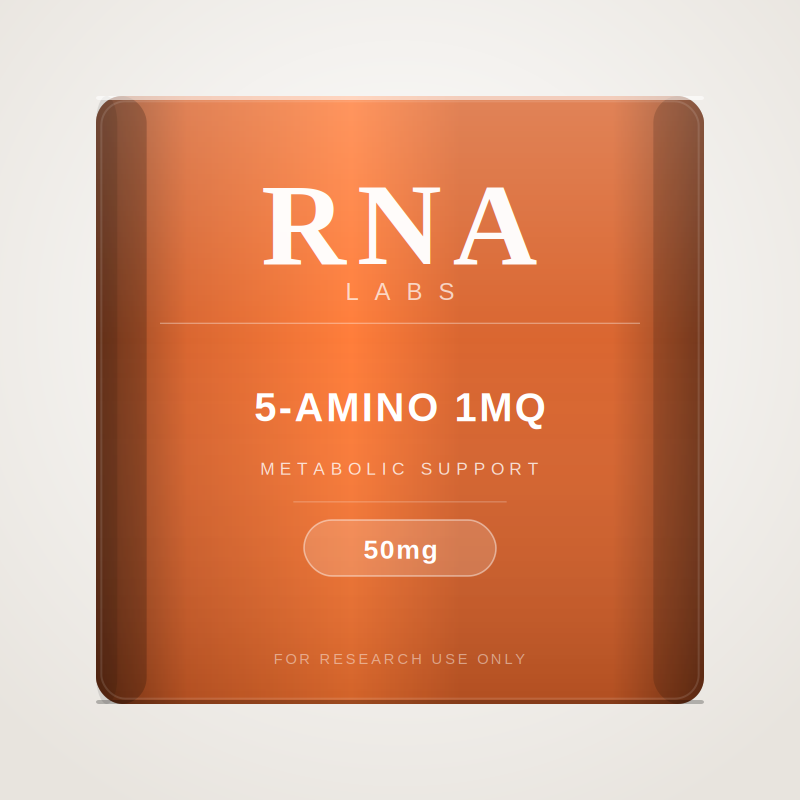
5-Amino 1MQ 50mg
$140.00
Small molecule NNMT inhibitor. Research into adipogenesis inhibition and NAD+ pathway modulation.
Use the peptide calculator to determine exact reconstitution volumes and dosing schedules for your research protocol.
Open Peptide Calculator ↗5-Amino-1MQ (5-amino-1-methylquinolinium) is a small molecule inhibitor of NNMT (Nicotinamide N-Methyltransferase), an enzyme highly expressed in adipose tissue, liver, and skeletal muscle that has been identified as a key regulator of cellular metabolism and fat cell differentiation. Unlike the peptide-based compounds in the RNA Labs catalogue, 5-Amino-1MQ is a small molecule that readily crosses cell membranes without requiring special delivery systems. Research interest has accelerated since discoveries linking NNMT activity to obesity, metabolic syndrome, cellular ageing, and the regulation of the NAD+ metabolome.
Molecular Data
Molecular Formula: C10H11N3 | Molecular Weight: 173.21 g/mol | CAS Number: 1190392-41-6
NNMT Inhibition Mechanism
NNMT catalyses the N-methylation of nicotinamide (a NAD+ precursor) using S-adenosyl methionine (SAM) as the methyl donor, producing 1-methylnicotinamide and S-adenosyl homocysteine (SAH). This reaction consumes both the methyl donor pool (limiting other methylation reactions) and NAD+ precursors (reducing NAD+ availability). 5-Amino-1MQ competitively inhibits NNMT, thereby preserving the NAD+ precursor pool and restoring SAM-mediated methylation capacity — reversing two distinct metabolic deficits simultaneously.
Adipogenesis Inhibition
NNMT is highly expressed in pre-adipocytes and its activity increases during differentiation into mature fat cells. Research demonstrates that NNMT inhibition with 5-Amino-1MQ significantly reduces pre-adipocyte differentiation and lipid accumulation without directly inducing adipocyte apoptosis. This adipogenesis-specific effect is distinct from general metabolic stimulants and suggests a targeted mechanism for reducing fat cell formation rather than simply increasing fat oxidation.
NAD+ Pathway Restoration
By reducing NNMT-mediated consumption of nicotinamide, 5-Amino-1MQ effectively increases the availability of NAD+ precursors and supports SIRT1 activation — a NAD+-dependent deacetylase that promotes fat oxidation, mitochondrial biogenesis, and glucose homeostasis. This indirect NAD+-boosting mechanism complements direct NAD+ precursor supplementation research and may have synergistic research applications when combined with NMN or NR.
In Vivo Metabolic Effects
Mouse studies demonstrate that 5-Amino-1MQ treatment produces significant reductions in adiposity and improvements in metabolic rate without appetite suppression — an unusual combination that suggests a direct thermogenic or lipolytic mechanism rather than caloric restriction. Importantly, effects appear to be fat-specific, with maintained lean mass and metabolic improvements including improved glucose tolerance and insulin sensitivity.
Future Research
Research interest in NNMT inhibition is expanding rapidly, with investigations into cancer metabolism (NNMT is overexpressed in many cancers and associated with poor prognosis), ageing (NNMT activity increases with age), and the therapeutic potential of combining NNMT inhibition with NAD+ precursor supplementation.

Reviews
There are no reviews yet.