For research purposes only — not for human consumption — 18+ only
Other
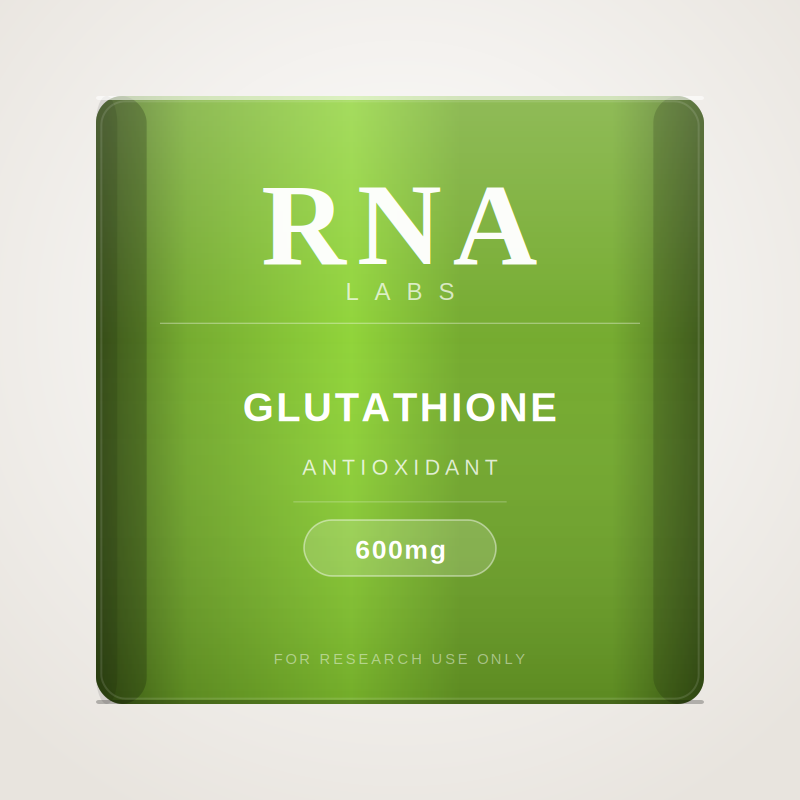
Glutathione 600mg
$40.00
Master endogenous antioxidant. Research in oxidative stress detoxification and mitochondrial health.
Glutathione (γ-L-Glutamyl-L-cysteinylglycine) is the most abundant endogenous antioxidant in mammalian cells, present at millimolar concentrations intracellularly. It is a tripeptide synthesised in the cytosol from glutamate, cysteine, and glycine by the enzymes glutamate-cysteine ligase and glutathione synthetase. As the master regulator of cellular redox state, glutathione is central to oxidative stress research, toxicology, cancer biology, and virtually every major disease model involving reactive oxygen species.
Molecular Data
Sequence: γ-Glu-Cys-Gly (reduced form, GSH) | Molecular Formula: C10H17N3O6S | Molecular Weight: 307.32 g/mol | CAS Number: 70-18-8 | PubChem CID: 124886
Direct Antioxidant Activity
Glutathione (GSH) acts as a direct free radical scavenger, donating a hydrogen atom to neutralise reactive oxygen species (ROS) and reactive nitrogen species (RNS), becoming oxidised glutathione disulfide (GSSG) in the process. GSSG is rapidly reduced back to GSH by glutathione reductase using NADPH as the electron donor, maintaining the high GSH:GSSG ratio essential for cellular antioxidant capacity. This cycle allows a single glutathione molecule to neutralise multiple ROS equivalents.
Glutathione Peroxidase System
GSH serves as the essential substrate for glutathione peroxidase (GPx) enzymes, which detoxify hydrogen peroxide and lipid peroxides — including potentially membrane-damaging phospholipid hydroperoxides. GPx-mediated detoxification is the primary mechanism protecting cells against peroxide-induced oxidative damage and is particularly important in tissues with high metabolic rate and ROS production such as liver, red blood cells, and mitochondria.
Phase II Detoxification
Glutathione conjugation, catalysed by glutathione S-transferases (GST), is a major Phase II detoxification pathway for electrophilic xenobiotics including pharmaceutical drugs, environmental pollutants, and carcinogens. GSH-conjugated compounds are generally more water-soluble and less toxic than their parent molecules, facilitating renal and biliary excretion. GSH depletion therefore directly impairs the liver's ability to detoxify exogenous chemicals.
Disease Research Applications
Glutathione depletion is documented in virtually every major oxidative stress-related disease model — including cancer, neurodegeneration (Parkinson's, Alzheimer's), cardiovascular disease, diabetes, HIV infection, and ageing. In vitro research uses exogenous GSH to study redox signalling, protect cell cultures from oxidative challenge, and investigate the consequences of antioxidant depletion. Mitochondrial GSH is a particularly active research focus given its role in protecting the inner mitochondrial membrane from lipid peroxidation.
Future Research
Glutathione research continues to expand in areas including mitochondrial redox biology, cancer immunotherapy (GSH modulation of immune cell function), neurodegeneration, and the development of GSH delivery systems with enhanced cell permeability for therapeutic research.
Product Usage
This product is intended as a research chemical only. This designation allows the use of research chemicals strictly for in vitro testing and laboratory experimentation only. All product information available on this website is for educational purposes only.
Bodily introduction of any kind into humans or animals is strictly forbidden by law. This product should only be handled by licensed, qualified professionals.
This product is not a drug, food, or cosmetic and may not be misbranded, misused or mislabelled as a drug, food or cosmetic.
Reviews
There are no reviews yet.