For research purposes only — not for human consumption — 18+ only
Anti-Aging
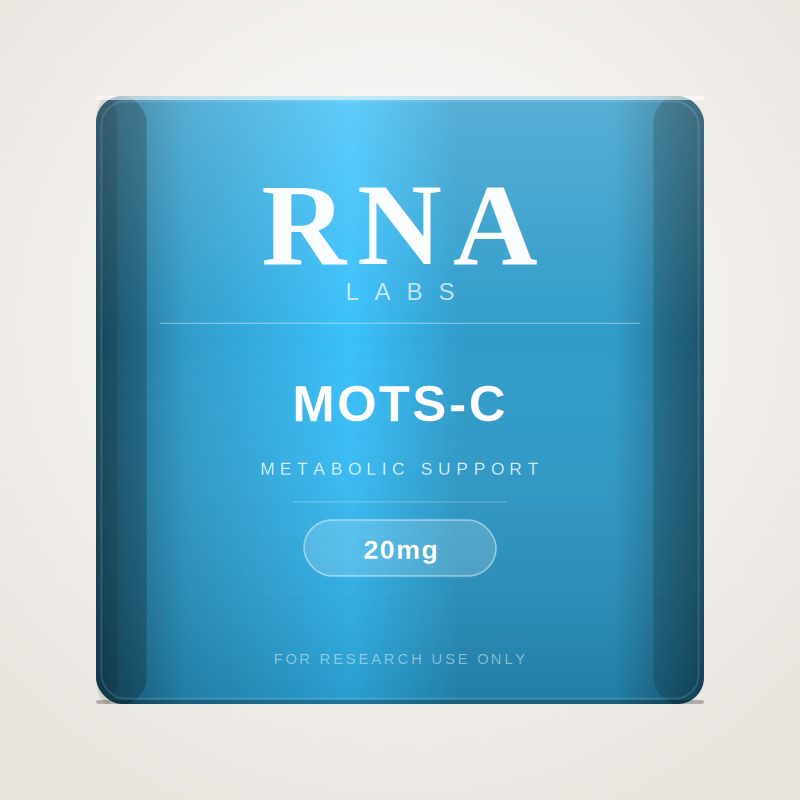
MOTS-c 20mg
$100.00
Mitochondrial-derived peptide. Research in metabolic health insulin sensitivity and exercise mimicry.
MOTS-c (Mitochondrial Open Reading Frame of the 12S rRNA type-c) is a mitochondria-derived peptide encoded within the mitochondrial genome itself — a highly unusual origin for a bioactive peptide. It functions as a mitochondrial stress signal that translocates to the nucleus in response to metabolic stress, directly regulating nuclear gene expression and systemic metabolism. Discovered in 2015, MOTS-c has rapidly emerged as a major research target in metabolic disease, exercise biology, and ageing, functioning as a hormone-like molecule that mediates communication between mitochondria and the rest of the body.
Molecular Data
Sequence: MRWQEMGYIFYPRKLR | Molecular Formula: C110H187N35O28S | Molecular Weight: 2681.0 g/mol
AMPK Activation and Metabolic Regulation
MOTS-c activates AMPK (AMP-activated protein kinase), a master regulator of cellular energy homeostasis. It inhibits the folate cycle and de novo purine biosynthesis, increasing AICAR — an endogenous AMPK activator. In skeletal muscle, this drives glucose uptake independently of insulin signalling, making MOTS-c of particular research interest in insulin resistance and type 2 diabetes models.
Exercise Mimicry
One of MOTS-c's most studied properties is its ability to replicate aspects of the metabolic response to exercise. Administration of MOTS-c to sedentary mice produces improvements in glucose tolerance, insulin sensitivity, and physical performance comparable to those induced by regular exercise. This exercise-mimetic property has generated significant interest in the context of metabolic disease, sarcopenia, and conditions where exercise capacity is limited.
Age-Related Decline
Circulating MOTS-c levels decline significantly with age and obesity in both animal and human studies. This decline correlates with deteriorating insulin sensitivity and metabolic flexibility. Research suggests that declining MOTS-c may be a mediating factor in age-related metabolic dysfunction, positioning MOTS-c replacement or augmentation as a potential research strategy for metabolic ageing.
Systemic Signalling
Unlike most mitochondrial proteins that remain within cells, MOTS-c is secreted into the bloodstream and acts as a hormone-like systemic signal. Studies show MOTS-c regulates whole-body glucose homeostasis and responds dynamically to metabolic stressors, exercised, and fasting. This systemic role distinguishes it from conventional mitochondrial peptides and opens new avenues in inter-organ communication research.
Future Research
MOTS-c is an active area of investigation in metabolic disease, exercise biology, longevity, and inter-organ communication research. Its unique mitochondrial origin and systemic hormonal activity make it a novel class of research compound with broad potential applications.
Product Usage
This product is intended as a research chemical only. This designation allows the use of research chemicals strictly for in vitro testing and laboratory experimentation only. All product information available on this website is for educational purposes only.
Bodily introduction of any kind into humans or animals is strictly forbidden by law. This product should only be handled by licensed, qualified professionals.
This product is not a drug, food, or cosmetic and may not be misbranded, misused or mislabelled as a drug, food or cosmetic.


Reviews
There are no reviews yet.