For research purposes only — not for human consumption — 18+ only
Anti-Aging
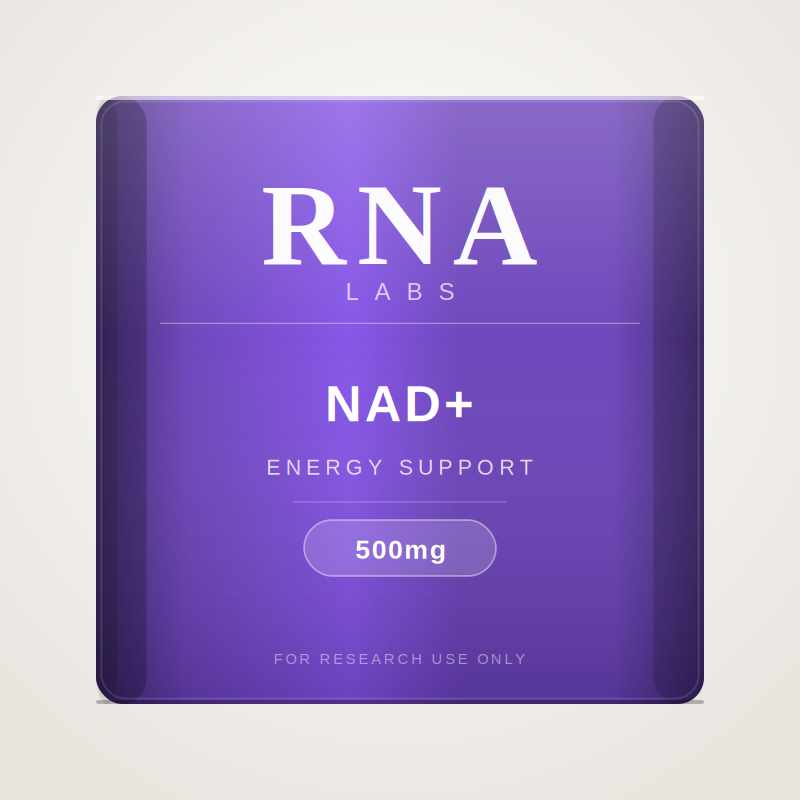
NAD+ 500mg
$80.00
Essential coenzyme for cellular energy metabolism DNA repair and sirtuin activation. High-purity lyophilised form.
NAD+ (Nicotinamide Adenine Dinucleotide) is an essential coenzyme present in every living cell, functioning as a critical electron carrier in metabolic reactions and as a substrate for key regulatory enzymes involved in DNA repair, gene expression, and cellular stress responses. NAD+ research has accelerated dramatically following discoveries linking NAD+ decline with ageing and metabolic disease. It is the foundational substrate for sirtuins (SIRT1-7), PARP enzymes involved in DNA repair, and CD38 — enzymes collectively regulating some of the most fundamental processes in cell biology.
Molecular Data
Molecular Formula: C21H27N7O14P2 | Molecular Weight: 663.43 g/mol | CAS Number: 53-84-9 | PubChem CID: 5892
Role in Energy Metabolism
NAD+ serves as an electron acceptor in glycolysis, the Krebs cycle, and beta-oxidation of fatty acids, accepting hydride ions (H−) to form NADH. This NADH then donates electrons to the mitochondrial electron transport chain, driving ATP synthesis. NAD+ is therefore fundamental to cellular energy production — without adequate NAD+, mitochondrial respiration is impaired and cells must rely on less efficient anaerobic glycolysis.
Sirtuin Activation and Longevity
Sirtuins (SIRT1-7) are NAD+-dependent deacetylases that regulate a wide range of cellular processes including DNA repair, mitochondrial biogenesis, inflammatory response, and metabolic adaptation. Because sirtuin activity is directly dependent on NAD+ availability, declining NAD+ levels with age leads to impaired sirtuin function. Research demonstrates that restoring NAD+ levels reactivates sirtuin-dependent pathways and improves metabolic function in aged animal models.
DNA Repair via PARP Enzymes
PARP-1 and PARP-2 (poly-ADP ribose polymerases) consume NAD+ as their substrate to repair DNA strand breaks. Under conditions of high DNA damage — oxidative stress, radiation, genotoxic chemicals — PARP-1 activation can deplete cellular NAD+ reserves, creating a competition between DNA repair and energy metabolism. Research into NAD+ supplementation in the context of DNA damage and genomic instability is an active area of investigation.
Age-Related NAD+ Decline
Cellular NAD+ levels decline approximately 50% between the ages of 40 and 60 in human tissue, driven by increased CD38 activity (a major NAD+-consuming enzyme), declining biosynthetic capacity, and increased DNA damage demands on PARP enzymes. This decline correlates with hallmarks of ageing including mitochondrial dysfunction, increased inflammation, declining stem cell activity, and metabolic inflexibility.
Future Research
NAD+ biology is one of the most active areas in ageing and metabolic research. Current investigations are exploring NAD+ supplementation in neurodegeneration, cardiovascular disease, kidney disease, hearing loss, and metabolic syndrome models.
Product Usage
This product is intended as a research chemical only. This designation allows the use of research chemicals strictly for in vitro testing and laboratory experimentation only. All product information available on this website is for educational purposes only.
Bodily introduction of any kind into humans or animals is strictly forbidden by law. This product should only be handled by licensed, qualified professionals.
This product is not a drug, food, or cosmetic and may not be misbranded, misused or mislabelled as a drug, food or cosmetic.
Reviews
There are no reviews yet.